What was the problem with House of Commons Standing Orders in the Gaza debate? Forthwithery explained
27 Feb 2024![The Speaker of the House of Commons, the Rt Hon Sir Lindsay Hoyle MP, at Prime Minister's Questions, 13 December 2023. ©UK Parliament/Jessica Taylor [CC BY-NC-ND 2.0 DEED]](https://images.ctfassets.net/n4ncz0i02v4l/7LcnscMu6XDoroOXJwxChP/81d03affc6888f44b2b3eb131dc47f8a/Banner_Speaker_in_the_Chair_1920x1080.jpg?fm=avif&fit=fill&q=60&w=1920&h=1080&f=left)
Procedurally, what was the cause of the furious party row over the Speaker's decision to break with precedent on an Opposition Day debate on 21 February 2024 ? What happened, what does it tell us about parliamentary procedure and why it matters, and what could be done to ensure the problem does not arise again?
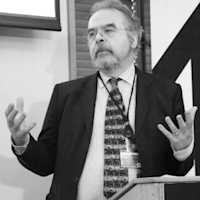
Former House of Commons Clerk
Paul Evans
Paul Evans
Former House of Commons Clerk
Paul Evans CBE retired in August 2019 from the post of Clerk of Committees in the House of Commons, after 38 years working there. He was made a CBE in 2019.
Get our latest research, insights and events delivered to your inbox
Subscribe to our newsletter
We will never share your data with any third-parties.
Share this and support our work
The role of the Speaker of the House of Commons is often compared to that of an umpire or referee. They apply the rules, penalise infractions and decide whether goals or runs or points are properly awarded. For the referee of a football game or the umpire of a cricket match this can involve some fine, disputable judgments, often made in a split-second. This analogy with the occupants of the Chair in the House of Commons is no more than metaphorically true but it can be a useful one. The added complication for the Commons’ Chair is that during matches between the top two teams there are also small groups of players from the lower leagues on the pitch, who play randomly from either end and try to score against both the main teams.
Whether in sport or politics, the decisions of the referee are often criticised by the spectators, but if chaos is to be avoided the players at least must acknowledge their authority – even when they are clearly wrong. The Speaker has acknowledged that he misjudged the events of last week: it remains to be seen whether all the players will accept his apology and move on. In the meantime, the furore that surrounded his decision highlighted the extent to which many spectators – both inside and outside the House of Commons – do not understand the rules by which MPs are expected to play. So, procedurally, what happened and why does it matter?
The rulebook for the House of Commons is its Standing Orders. Because Parliament is the unconstrained supreme law maker in the UK it is vital that its decisions can be seen to be arrived at fairly and in accordance with due process, and that is what the Standing Orders, enforced by its Speaker, are there to ensure.
But these rules are far from self-explanatory – they are an accretion of many centuries and a hodgepodge of new inventions, unexplained assumptions, omissions and silences, and outlawing of practices long since forgotten. Many of them are, however, quite clear, but to be sure of understanding them you must know something of their history, of the conventions and precedents of their interpretation. They do not amount to an instruction book. That’s why you need an encyclopaedic knowledge of the thousand or so pages of Erskine May’s Parliamentary Practice (the official description of precedents and conventions) and, ideally, plenty of real-time experience to be an effective “proceduralist”.
The growth of the rule book of the Commons from some half-a-dozen Standing Orders 200 years ago to over 200 today has been a response to many factors, the most significant of which are the increasing scope and complexity of government and the development of the party system in the age of universal franchise. In particular, the response to the domination of party has been to devise rules which by and large hand control of parliamentary time and the agenda to the governing party and prevent individual MPs and minorities from blocking its wishes.
Much has already been said and written about the events of Wednesday 21 February 2024, so this post concentrates on what it tells us about procedure rather than about politics. It was an Opposition Day – that is, one of the few days a year which the Standing Orders set aside for parties other than the Government to determine the House’s agenda. There are 20 of these in each annual session, although their allocation is in the hands of the Government (between November 2018 and April 2019, at the height of the Brexit wars, Theresa May’s minority Government failed to allocate any).
Opposition Days were invented in the early 1980s to replace the 26 Supply Days on which the House had been supposed to debate aspects of public spending plans. Those had long since become opportunities for quite general debates on aspects of Government policy with scant connection to the Estimate that was supposed to be being debated. So, the 26 days were converted to 20 Opposition Days, three Estimates Days under the control of the then new select committees, and three days in Government time for debating each of the armed forces.
Three of these 20 Opposition Days were allocated to the “second largest opposition party”. That party was expected (by convention rather than rule) to share some of this time with some of the larger small parties.
So 21 February was one of the rare days on which the second-largest opposition party (currently the SNP) could set the agenda. They have been criticised for their choice of topic (it is perhaps worth noting that their motion was not addressed to or demanding action by His Majesty’s Government) but they were not breaking any of the rules. The chaotic scenes which ensued were precipitated by the Speaker’s decision to depart from longstanding precedent and allow an amendment from the largest opposition party (Labour) to be debated and voted on as well as an amendment from the Government.
The Speaker’s rationale was that on the complex and sensitive matter of Gaza he wanted to allow as wide a range of views as possible to be debated, though he did not extend this latitude to the Liberal Democrats who had also tabled an amendment.
Crucially, the unique procedural design of Opposition Days (which in fact borrows from earlier standard procedures which were abolished in the 1960s or before) reverses the normal order of taking amendments to give the first vote to the original opposition motion and only then to the Government amendment. This was designed to give the opposition parties a straight up-and-down vote on their words rather than having the only substantive motion voted on as that which had already been amended by the Government. But in choosing to allow debate and a vote on the Labour amendment first, this procedure became clumsy rather than elegant and risked (as in fact happened) there being no straight vote on the SNP words.
The more logical approach, which might possibly have satisfied all parties, would have been to have a vote on the Labour amendment between the vote on the SNP’s words and the vote on the Government amendment. But this was not possible because of one little word in Standing Order No. 31 – “forthwith”.
On 17 February 1881, in an important moment relevant to recent events because it showed the creative power of the Speaker when supported by a cross-party majority, Mr Speaker Brand invented the “closure” to bring to a halt a sitting that had been prolonged for 41 hours by the “Irish Obstructionists”. It was unprecedented, but he was supported by the majority in the House. A fortnight later the Speaker published a set of “urgency rules” (which formed the basis of later permanent Standing Orders). Included amongst them was this explanatory paragraph:
“… when, by any of the rules framed by Mr Speaker, a question is to be put forthwith, no amendment, adjournment or debate shall be allowed.”
From there, the word “forthwith” became a regular feature of the Standing Orders. As they accumulated, it was sometimes accompanied by the phrase “without amendment or debate” or some variation of that, and sometimes not. In 1971, on the recommendation of a Standing Orders revision committee, it was standardised to just plain “forthwith” on the grounds (perhaps justifiable then but probably no longer) that everyone knew what it meant.
On 9 January 2019, on a motion to restart the abandoned debate on the first Brexit-related “meaningful vote”, an amendment (in the name of Mr Dominic Grieve) to the Government’s motion was selected by Mr Speaker Bercow, despite the question being required to be put “forthwith” under a previous Business of the House order. When the motion was moved, Speaker Bercow then invited Mr Grieve to move his amendment, which was divided upon and agreed to (308 to 297). When challenged on this unusual interpretation of the word forthwith, Mr Bercow responded:
“Under paragraph (9) of [the order of 4 December], the question on any motion to vary the order “shall be put forthwith.” I interpret that to mean that there can be no debate, but I must advise the House that the terms of the order do not say that no amendment can be selected or moved. I cannot allow debate, but I have selected the amendment in the name of the right hon. and learned Member for Beaconsfield.”
This was just one of a series of occasions on which Speaker Bercow demonstrated a considerable amount of what (if you were charitable) could be described as creative flair in the interpretation of Standing Orders. Most controversially, and in the closest parallel to recent events, was when he allowed an extra amendment to the motion replying to the Queen’s Speech in 2013 which permitted over a hundred Conservative backbenchers to express their impatience for a referendum on EU membership.
The January 2019 decision was much criticised at the time (though in practice its effects were minimal on the conduct of further ‘meaningful votes’). But if Speaker Hoyle had used the same reasoning on the Gaza debate to interpolate the Labour amendment between the SNP motion and the Government amendment it might have been a neater way of dealing with the problem he confronted and preserved the SNP’s entitlement to a straight vote on the words of their own motion.
Currently the word “forthwith” appears 137 times in the Commons Standing Orders. Its slow but inexorable advance over the last century and a half may tell us a few things about what is wrong with the rulebook. It started as a way to circumvent deliberate obstruction but has morphed too often into a way to prioritise decision over deliberation and avoid challenge – reinforcing the Government’s ability to dominate the House of Commons.
Two examples may indicate its potential for creating undesirable outcomes.
After a Government Bill has had a Second Reading, a Minister may move a timetabling (programme) motion. It must, under the Standing Orders, be put “forthwith”. It’s all very well not to have a further debate perhaps, but to prevent anyone in the House proposing a change to the timetable decided by the Government looks (and is) seriously oppressive.
Another example is after a Statutory Instrument has been considered in a Delegated Legislation Committee. The question to approve it on the floor of the House must then be put “forthwith”, even if the Committee voted against the Instrument or pointed out some grave flaw in its drafting. The use of “forthwith” means that the House cannot consider any amendment to express these doubts or refer the Instrument for further consideration or in any way to qualify its approval.
As well as providing too tempting a way for the minority voices in the House to be prevented from even testing the Government’s majority, there is another problem with “forthwith” that is symptomatic of a wider problem with the House’s Standing Orders: it is an example of private jargon. No parent in real life says to their child “This is our stop. We must alight forthwith”, and no-one asks the waiter to bring the bill “forthwith”. The 1971 Standing Orders revision committee made the wrong choice when it standardised the use of this word with no explanatory or qualifying terms attached. It should have, instead, standardised it to “without amendment or debate”, which would in turn have allowed the option of allowing amendment but no debate to be specified. The Standing Orders should say what they mean.
Procedure should be the servant of politics, not its master. “Forthwithery” has got out of hand in the Commons and needs to be finer tuned. Speaker Hoyle has said that Standing Order No. 31 “reflects an outdated approach that restricts the options that can be put to the House” on Opposition Days. He has asked the House of Commons Procedure Committee to review the operation of the Standing Order. All the Procedure Committee needs to do is replace the word “forthwith” in Standing Order No. 31 with a wording which allows for more amendments than just the Government one to be moved and decided without debate if the Opposition motion is defeated. But it also would need to recognise that if it did so, it would place a new burden on future Speakers to decide whether an SNP amendment (or Liberal Democrat, or Green, or Plaid Cymru, or DUP, or backbench or any combination of these and others) should be voted on, on an Official Opposition Day.
Evans, P. (27 February 2024), What was the problem with House of Commons Standing Orders in the Gaza debate? Forthwithery explained, (Hansard Society blog)